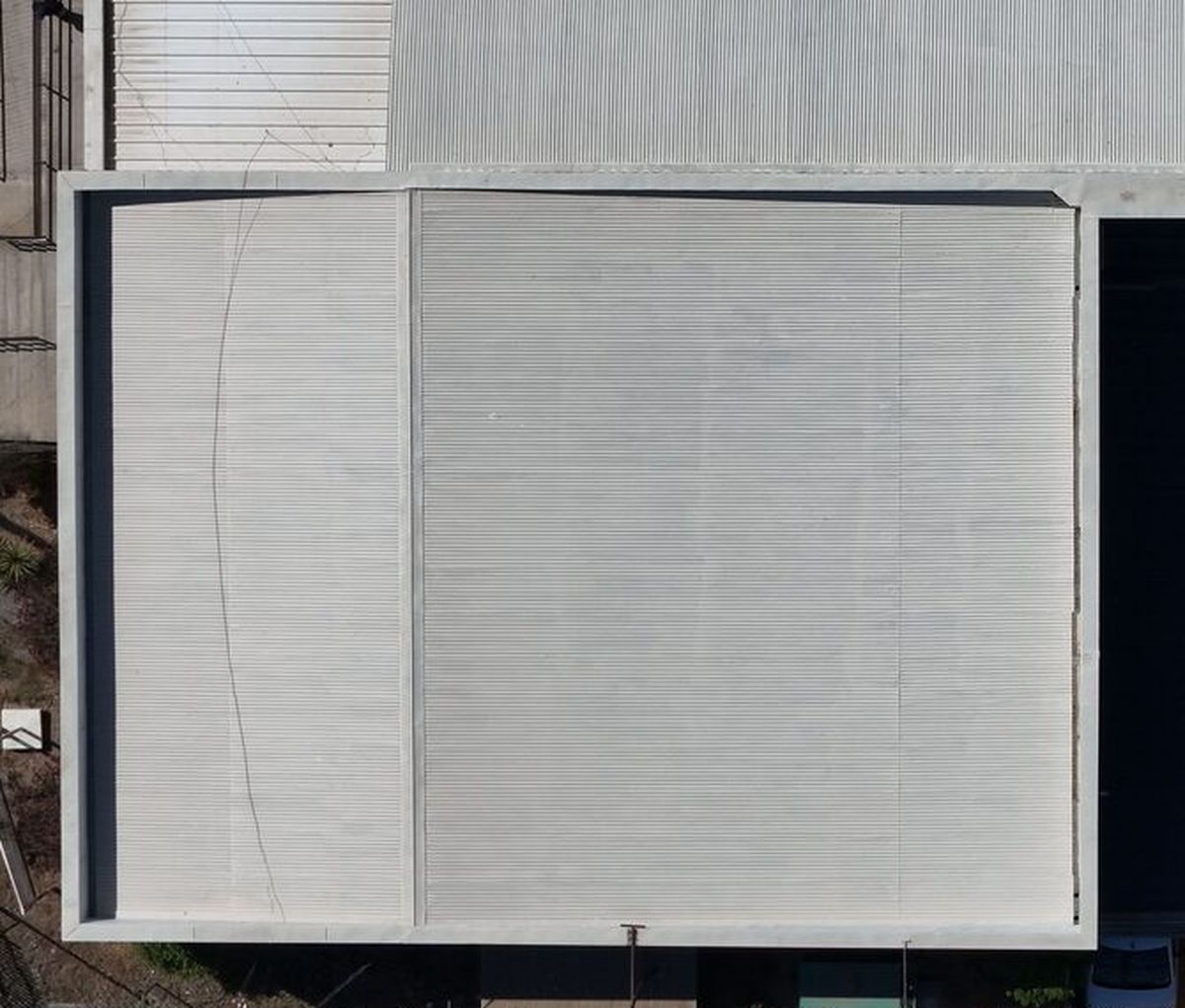
Flat roofs are not actually flat. They are built with slope toward drains, and when water still stands on the surface two days after the rain stopped, something in that drainage design is no longer working. Ponding is among the most common findings on the commercial roofs we inspect, and it is worth understanding because it compounds. The longer water sits, the faster everything under it ages.
What standing water actually does
- Ages the membrane under it. Ponded areas cycle through wet, hot, and frozen while the rest of the roof stays comparatively stable. Membranes age fastest where water sits.
- Adds load. Water is heavy. A large ponded area adds real weight to the deck and structure below it, and in winter it becomes ice.
- Finds the weak point. Water sitting on a seam probes it continuously. A seam that would shed a passing rain will eventually lose to a pond that never leaves.
- Grows things. Standing water supports algae and vegetation, which hold moisture against the membrane and clog drains further.
Why it happens
The usual causes, roughly in order of how often we find them: clogged or undersized drains and scuppers, insulation that has crushed or settled into low spots, deflection in the structure itself, and additions or equipment installed after the original drainage design without accounting for it. HVAC replacements are a frequent offender, since a new unit on new curbs can quietly redirect water that used to reach a drain.
Not sure what your roof needs? The inspection is free and the recommendation comes before the number.
Check my roof conditionThe realistic fixes, cheapest first
Clear and correct the drainage
Sometimes ponding is a maintenance problem wearing a capital-project costume. Cleared drains, repaired scupper boxes, and added strainers solve a meaningful share of cases. This is one reason scheduled maintenance pays for itself.
Add drains or overflow paths where the water actually goes
If the building has settled or the roof was always drain-poor, adding a drain at the low point is often cheaper than rebuilding slope.
Build slope into the fix
Tapered insulation can be part of a restoration or re-roof, rebuilding positive drainage without touching the structure. Spray polyurethane foam handles this well because it can be built up precisely where the low spots are.
Address the structure
Where deflection is structural, the fix is too. That finding is rarer, and it is exactly what an inspection is for, because coating over a structural problem seals money into a roof that is still moving.
The 48-hour rule of thumb
Water that disappears within 48 hours of rain is generally considered normal drying. Water still there after 48 hours deserves attention. Walk the roof two days after the next good rain, photograph what you find with something for scale, and you will have the start of a real answer before anyone quotes you anything.